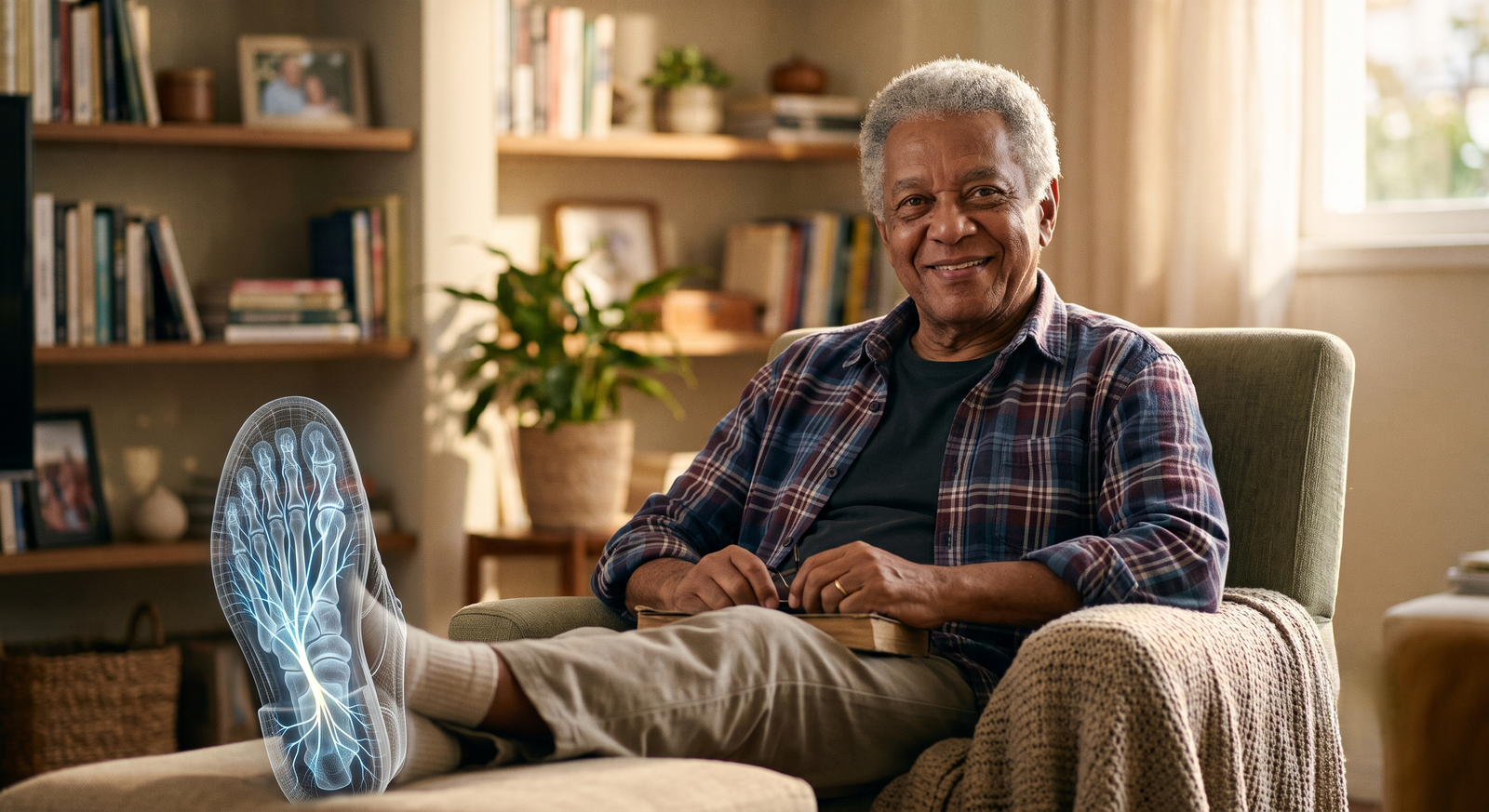
Peripheral neuropathy affects millions of people daily, bringing challenges that go far beyond physical discomfort.
Living with a loss of sensation or constant pain in your legs and feet requires resilience—and,
above to all, high-quality information. Recent research in neurological health has highlighted the importance of looking at peripheral nerve health holistically.
Rather than simply masking the signs, modern science seeks to understand the underlying factors that contribute to the proper functioning of the nervous system.
A new educational video has been made available online to explain, in a simple and accessible way, how small changes in routine and proper nutritional support can assist circulation and well-being for those living with this condition.
…you are definitely not alone.
The Daily Challenge of Nerve Symptoms
For those dealing with this issue, the complaints are often very similar:
- A burning sensation or excessive heat in the soles of the feet.
- Constant tingling that disrupts your day and interferes with a good night's sleep.
- Gradual loss of sensation, causing insecurity when walking or performing simple daily tasks.
- A feeling of "heavy feet" or sharp, shooting pains.
If you identify with any of these symptoms, know that seeking answers and exploring lifestyle alternatives to complement your medical care is the safest path to regaining your independence.
The Role of Information in Integrative Care
"The key to effectively managing nerve health lies in understanding what the body needs to keep circulation active and tissues properly nourished."
The integrative approach emphasizes that, alongside traditional medical care, adopting healthy habits, specific nutrients, and proper stimulation of peripheral circulation are fundamental pillars for anyone wishing to maintain an active, comfortable routine.
A Perspective on Seeking Knowledge:
"In the beginning, the discomfort in my feet felt like something I just had to accept. Once I began to better understand how circulation and cellular nutrition affect the nerves, I started adopting daily habits that completely changed my comfort level. Today, I feel much more secure just walking around."
— Charles S., 67
What You Will Learn in This Free Educational Material:
- The Science Behind the Symptoms: What actually happens to peripheral nerves when they lack proper oxygenation and nutrients.
- Lifestyle and Circulation: How simple mobility habits and daily care routines help protect the body's extremities.
- Nutritional Support: The natural elements and components that recent studies highlight as allies for nerve health.
Exclusive Access to the Informational Content
Watch the full presentation and learn how to apply these supportive strategies to your daily routine.
Ingredients
Formulated with Beetroot, Honey, Pink Salt, Magnesium, Turmeric (Curcumin), Green Tea Extract, Apple Cider Vinegar, Arnica Montana, Vitamin E, Sunflower Oil, Menthol, Lemon, Garlic, Onion, Red Pepper Extract, and natural cotton fibers—a combination of carefully selected natural ingredients to support peripheral nerve health and overall well-being. This formula also addresses the effects of common daily habits, helping to support healthy circulation to the hands and feet.
Disclaimer
This product does not constitute medical advice and is not intended to diagnose, treat, cure, or prevent any disease. This product is not a substitute for medication or other treatment prescribed by a physician or health care provider.
These statements have not been evaluated by the Food and Drug Administration. This product is not intended to diagnose, treat, cure, or prevent any disease. Results may vary from person to person.
The content on this page is for informational purposes only and should not be considered a replacement for professional medical advice. Always consult with a qualified healthcare provider before starting any new health regimen.
Scientific References
- Zoubek, M.E. et al. (2020). "Systematic review: ibuprofen-induced liver injury." Alimentary Pharmacology & Therapeutics. pubmed.ncbi.nlm.nih.gov/31984540
- Mayo Clinic. "Peptic ulcer — Symptoms and causes." Mayo Foundation for Medical Education and Research. mayoclinic.org/diseases-conditions/peptic-ulcer
- Mayo Clinic. "Pregabalin (oral route) — Description and brand names." Mayo Foundation for Medical Education and Research. mayoclinic.org/drugs-supplements/pregabalin-oral-route
- Ruga, S. et al. (2023). "Novel Approach to the Treatment of Neuropathic Pain Using a Combination with Palmitoylethanolamide and Equisetum arvense L. in an In Vitro Study." International Journal of Molecular Sciences, 24(6), 5503. mdpi.com/1422-0067/24/6/5503
- Gatti, A. et al. (2012). "Palmitoylethanolamide in the Treatment of Chronic Pain Caused by Different Etiopathogenesis." Pain Medicine, 13(9), 1121–1130. academic.oup.com/painmedicine/13/9/1121
- Harry, G.J. (2013). "Microglia During Development and Aging." Pharmacology & Therapeutics, 139(3). pmc.ncbi.nlm.nih.gov/PMC3737416
- Gu, G. et al. (2022). "Spinal microglia contribute to sustained inflammatory pain via amplifying neuronal activity." Molecular Brain, 15. molecularbrain.biomedcentral.com/10.1186/s13041-022-00970-3
- Biswas, K. (2023). "Microglia mediated neuroinflammation in neurodegenerative diseases: A review on the cell signaling pathways involved in microglial activation." Journal of Neuroimmunology, 383, 578180. pubmed.ncbi.nlm.nih.gov/37672840
- Karavis, M.Y. et al. (2023). "Role of Microglia in Neuropathic Pain." Cureus, 15(8). pmc.ncbi.nlm.nih.gov/PMC10503876